Formerly Seattle Smile Designs & Bellevue Center for Orthodontics
Refer a PatientWhen Jaw Surgery May Be Needed
Sometimes jaw issues that can’t be resolved by orthodontic treatment alone may require jaw surgery. Jaw surgery corrects irregularities of the jawbones, realigning the jaws, teeth, and soft tissue so they function together.
Issues that may require jaw surgery include:
- Problems with swallowing or speech
- Difficulty chewing
- Incorrect mouth closure or facial asymmetry
- Pain from an improper bite
- Obstructive sleep apnea
Jaw surgery is considered an option once growth has ended, typically around 14-16 years for females and 17-21 years for males. Maxillomandibular advancement (MMA), described below, is the double-jaw surgery used for this treatment.
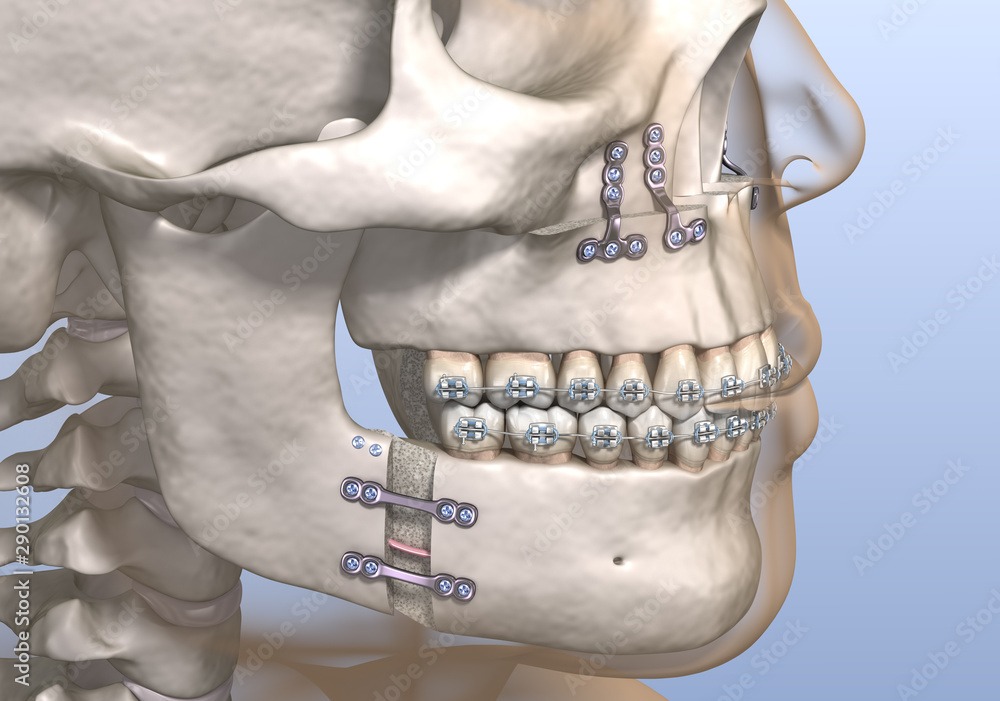
What Is MMA Surgery?
---Maxillomandibular Advancement (MMA) is a jaw surgery that repositions both the upper jaw (maxilla) and lower jaw (mandible) more forward.
- The upper and lower jaws are carefully moved into a more ideal position by the surgeon.
- The jaws are stabilized with titanium plates and screws.
- The goal is to improve jaw alignment, bite function, facial balance, and airway.
Airway Considerations
Advancing both jaws forward can:
- Increase airway volume.
- Increase space for the tongue.
- Improve nasal and throat airflow.
- Decrease snoring and sleep-disordered breathing.
- Improve lip competence.
For patients with:
- Moderate to severe sleep apnea.
- Significant airway restriction.
- Skeletal jaw discrepancies.
MMA surgery is one of the most effective surgical treatments for improving airway structure and long-term breathing health. Please ask your doctor about success rates vs. cure rates for surgery and sleep apnea.
Treatment Timeline & Sequence
Step 1. Referral and consultation with the oral and maxillofacial surgeon for surgical planning, imaging, and medical clearance.
Step 2. Pre-Surgical orthodontic preparation with braces or aligners to align the teeth and idealize the bite for surgery. This can take approximately 8-12 months, but is patient-specific.
Step 3. Surgical procedure (performed in a hospital with the surgeon). An overnight hospital stay is typical.
Step 4. About 6 - 10 weeks after surgery will be your first orthodontic adjustment.
Step 5. Post-surgical orthodontic treatment with braces or aligners continues to refine and finalize the bite. This can take around 6-12 months, but is patient and bite-specific.
Step 6. If you started with a pre-op sleep study, we will ask that you obtain a post-op sleep study.
Estimated Total Treatment Time: Approximately 24 months, but this is patient specific.
What to Expect After Surgery
- Swelling and bruising are normal in the first 2-3 weeks.
- A temporary liquid or soft-food diet will be required during early healing.
- Mild numbness in the lips or chin can occur and usually improves over time.
- Full bone healing takes several months.
- Please ask your surgeon to elaborate on the above details as each patient and surgeon is different.
Orthodontic treatment will continue after surgery to ensure a stable, balanced, and functional final result.
We are Here for You
Please do not hesitate to reach out with any questions. We look forward to partnering with you on this transformative journey.
For all detailed questions related to the surgery, including risks, post-operative instructions and restrictions, and insurance coverage, please contact your oral surgeon.
Contact UsSurgically Facilitated Orthodontic Therapy
The before-and-after examples below are surgically facilitated orthodontic therapy (SFOT) cases, not jaw surgery. SFOT is periodontal surgery that helps teeth move during braces or aligner treatment. It is a different procedure from maxillomandibular advancement, which repositions the jaws.
Our goal is a beautiful smile at two locations
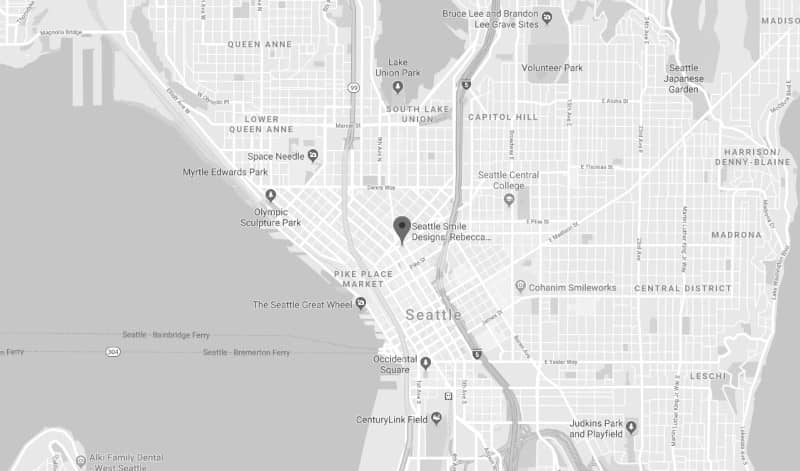
Seattle Orthodontics
---509 Olive Way Suite 840
Seattle, WA 98101
Text or Call: (206) 623-2192 | Email
Office Hours
Mon - Wed, 8:00 AM - 4:30 PM
Thu, 9:00 AM - 12:00 PM
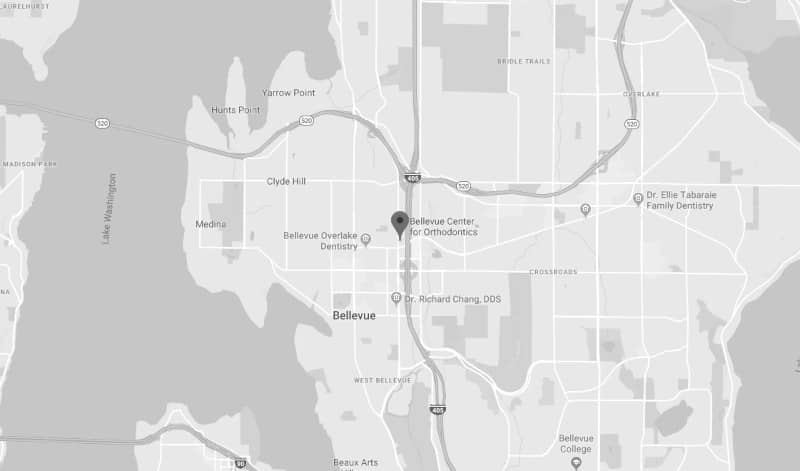
Bellevue Orthodontics
---1200 112th Ave NE B-200
Bellevue, WA 98004
Text or Call: (425) 453-0551 | Email
Office Hours
Mon - Thurs, 8:00 AM - 4:30 PM